Alaria Recipes
I was a boy, looking into my father's eyes, the night he died of cancer. It took me years, healing my grief and loss of him, before I was able to realize that his mind essence had been transferred to me. Occasionally, a channel or a psychic will pick up on the link he and I have, and the message is always some variation of "He wants you to know that he never left you." One particular psychic relayed this message: "He wants you to know that the alaria you harvest could have helped to heal his cancer."
This message came after Jane Teas, a cancer researcher, had used alaria in a nutritional study with breast cancer survivors, and her opinion was that alaria helps strengthen the immune system against cancer. I was guided by my dad to settle in this place where a lot of beautiful alaria grows in the surf.
The Pacific cousin of alaria is wakame, and you may substitute alaria in any recipe that calls for wakame. Alaria grows about a foot a week in May and June. Yesterday I watched my son Jay harvesting alaria on a ledge that was being intermittently covered over by three foot high surf swells.
When the wave surged over him, he hung on to the alaria like a rock climber grabbing his rope.
When the wave retreated, he cut himself free and walked the alaria to a bushel basket on higher ledge. Jay has the same tenacity and flexibility as alaria, and it's a joy to watch him working/playing in the surf.
Alaria is one of the most versatile sea vegetables that we harvest. The plants are 6-12 feet long, graceful and delicate, yet strong. They are olive-brown flat ribbons 1-3" wide with midribs that flash golden in the water. Alaria has a very clean smell and a mild taste. It grows in open surf, some of the most highly charged water on the planet. Alaria dancing in the surf reminds me of a beautiful ballerina: strong, yet gentle and graceful. Harvesting alaria in surf demands a sure agility and a consciousness that is constantly in present moment: I spot the alaria I want to cut, a wave covers it, but I remain focused on the spot and grab a hank of the alaria at its base as the wave goes out; another wave comes and covers me as I tenaciously hang on to the hank of alaria and cut it free from the ledge; the wave recedes, and I walk out of the surf, dragging the eight foot long hank of alaria firmly grasped in my hand, ready to be trimmed and swirled into a basket. Ho hum, another day at the office.....mid-June, new moon tide, first light at 4 a.m., Eastern Island, birds just waking up, baby seals in the water calling to their mothers. Soon the sun will appear.
In the kitchen, the quick way to cut dry alaria is with a scissors. You can also soak alaria, then use a knife to cut it. Since alaria expands as it rehydrates, the second method of cutting alaria (after it has rehydrated, with a knife) will give you more control over the size of your final pieces. Don't throw away the soaking water! This water contains minerals. For instance, alaria is high in calcium. It's comparable to whole sesame seeds as far as calcium content (1,100 mg/100 g) and has high vitamin A content (8487 IU/100 g) similar to parsley and spinach. It's a wise choice for nourishing your bones. It's rich in B complex vitamins, vitamin C & K. It has moderate iodine, good for everyone, especially those with type A or B blood. Use the soak water for cooking. Pre-soaking alaria is a way of tenderizing it. Pre-soak alaria for at least an hour, until the midrib is thoroughly rehydrated.
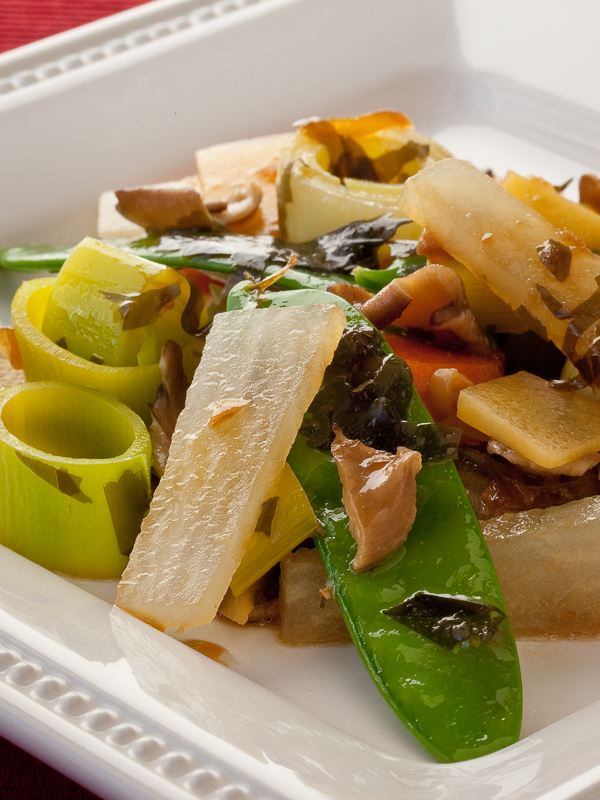
Total cooking time for alaria (slow boil/fast simmer) needs to be at least 20-40 minutes. Remember that this isn't like Japanese wakame which is often parboiled before drying to make it tender (and also results in the loss of minerals!). After 20-40 minutes of simmering, add sliced vegetables. The simplest combination would be one part alaria to four parts carrots. Cook until the carrots are tender. Add tamari to taste. Sometimes I throw in a couple of cloves, and it seems to work. Another simple combination is one part alaria, four parts green beans and a handful of almonds or sliced almonds, cooked until the beans are tender. Add a dash of tamari and a sprig of parsley. Another way to handle this dish would be to simmer the alaria until tender, place the green beans in boiling water for two minutes, drain and run under cold water to retain crispness and color, and then sauté the green beans in a cast-iron skillet on medium-high heat for three minutes (use refined sesame oil), add alaria and continue to sauté for three to four minutes. Remove from heat and season with tamari and add tamari-roasted almonds or sliced almonds. Pecans will work, too. Serve hot or cold.
Alaria is delicious when cooked with rice, barley, or millet. Cooked with beans (adukis, lentils, pintos, etc.), alaria will impart a rich "gravy" texture and help make the beans more digestible.
1 Tbsp oil (refined sesame or olive)
2 Tbsp shoyu
1 Tbsp rice syrup
1 tsp grated ginger
1/2 medium onion, finely diced
1-2 cloves garlic, minced (optional)
1/4 c maitake mushrooms, soaked
1/2 c (1/4 oz. dry) alaria, soaked and sliced into small pieces
1-2 c finely sliced vegetables (green beans, leeks, cauliflower, carrots, etc.)
Heat skillet and add oil, shoyu, rice syrup & ginger. Simmer 30 seconds, then add onion and garlic (if using). Sauté 1-2 minutes. Add alaria and sauté until well coated. Add water just to cover and simmer 15-20 minutes. Add vegetables, sauté briefly, cover and steam until vegetables are bright and crispy tender.
1 Tbsp olive oil
1 Tbsp balsamic vinegar
1/2 cup alaria, soaked 15-20 minutes and sliced
1 bunch scallions, rinsed, trimmed and left whole
1/2 head cauliflower, small florets
Grated zest of 1 lemon
Juice of 1 lemon
Place oil in skillet over medium heat. Add alaria and sauté several minutes. Add vinegar, stir, and lay scallions on top. Sprinkle with lemon zest and cover. Reduce heat to low and simmer 3-5 minutes until scallions are quite limp and beginning to brown. Remove from heat and transfer scallions to flat plate. Return pan to stove and add cauliflower. Raise heat to medium and sauté several minutes until cauliflower is crisp-tender. Remove from heat, add lemon juice and stir. Place cauliflower mixture on serving platter and top with scallions.
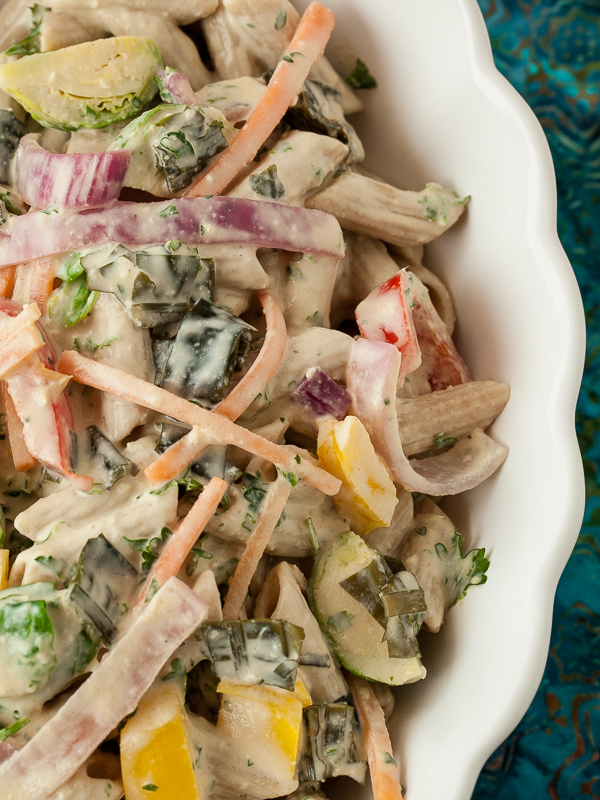
Simmer a cup of rehydrated alaria which has been snipped into one inch strips in enough water to cover for 20-30 minutes until tender. Drain and save the cooking water.
For the sauce: Combine in a blender: 1/2 cup tahini with lemon juice to taste, fresh herbs like thyme and basil and oregano, a clove or two of garlic, soak water from alaria. Set aside.
Blanch sliced vegetables in boiling water, looking for an intensification of color, immediately removing them to cold water. Use string beans, asparagus, colorful peppers, carrots, broccoli florets, whatever strikes your fancy.
Bring the blanching water back to a boil and cook pasta (linguine or fettuccine) until al dente. Drain, saving one cup cooking water. Put the pasta back in the pot and stir in a tablespoon of olive oil. Then add the vegetables and alaria to the pasta and stir in the sauce, combining gently. Add a few tablespoons of cooking water if desired. Reheat the mixture briefly and serve garnished with parsley and fresh herbs.
A lot of so-called raw seaweed salads found in oriental restaurants are actually made from blanched or parboiled seaweeds from the upper green zone which is more susceptible to pollution (and the recipe usually includes white sugar), so if you are a strict raw foodist, I advise you to learn to make your own raw seaweed salads from the brown zone which includes alaria, a very clean and vital choice. Dry alaria needs to be reconstituted with water for a few hours. As you sprinkle water on the dry alaria, think of it as making a pancake batter, and you want enough water to wet the flour, but not so much that it's runny. After the alaria is reconstituted, use a knife or scissors to cut it finely. (You could also cut dry alaria finely with a scissors before reconstituting it.) Add lemon juice. This will help release nutrients into solution, and it will also allow you to preserve reconstituted alaria in the refrigerator for up to three days. You may find it gets more tender with time. If you're not adverse to using heat, you can also blanch alaria briefly, steam for ten minutes, or even pressure cook for five minutes.
A salad marinade or dressing can be made with grated ginger juice (squeeze the juice out of the pulp or use a juicer), orange juice or raw unpasteurized honey for sweetener, sesame or toasted sesame oil or olive oil, a dash of tamari and/or brown rice vinegar. Mix it all together in proportion to suit your taste. The longer the alaria soaks, the more tender it becomes. Now imagine using this seaweed salad with chopped apples, or adding it to a dark green salad that includes romaine or baby greens, cucumber and parsley. Or how about small chunks of oranges or clementines? Yum! Keep experimenting! Keep it fresh and alive!
Thinly slice one pound of unwaxed cucumbers and sprinkle with one teaspoon of sea salt; set aside for thirty minutes. Dice half of a red pepper. In a small bowl, combine two tablespoons lemon juice, half a tablespoon sesame oil, one teaspoon rice vinegar. Lightly rinse the cucumbers, combine with the red pepper and a quarter cup of reconstituted and chopped alaria (see Raw Alaria Basics). Toss with the dressing.
Salad:
3/4 cup alaria, soaked and sliced
1 medium carrot, grated or sliced in very fine matchsticks
1/2 red onion, sliced in thin half-moons
1/2 cup diced cucumber
1/2 cup celery, cut in 1/8" slices
1-2 scallions, sliced thinly on the diagonal
1 pear, cut in 1/2" chunks
1/4 cup coarsely chopped walnuts
Dressing:
1" piece of fresh ginger, grated and juice extracted
Juice of 1 lemon
1/4 cup brown rice vinegar
1 tsp umeboshi vinegar
1 Tbsp rice syrup or honey
1/4 cup olive or sesame oil
Whisk together dressing ingredients. Set aside. Combine salad ingredients, except for walnuts, chopping and adding pear last to prevent it turning brown. Add enough dressing to lightly coat salad ingredients and toss gently. (Extra dressing may be refrigerated to use on other salads.) Allow salad to marinate 15-20 minutes. Sprinkle walnuts over top before serving.
Combine chopped tomatoes, avocado, lime and/or lemon juice, scallions, cilantro, sweet and/or hot peppers, olives and a dash of cayenne with finely chopped rehydrated alaria and a tablespoon of olive oil. Serve on a bed of mixed salad greens, or use as a stuffing in pita bread, tacos or tortillas, with grated cheese, beans and rice on the side.