Kelp Recipes
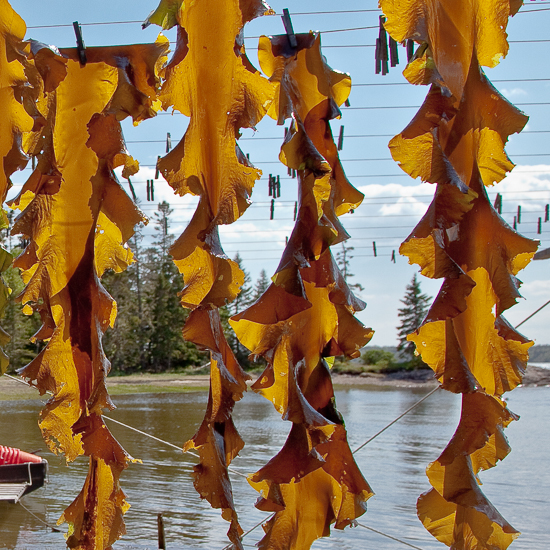
The life of a kelp plant is about three years, spent in a tidal flow that reverses direction every six hours. Imagine being anchored by a holdfast, your hollow stipe gently lifting you toward the light, your wide blade/frond growing in the ocean's inflow/outflow/inflow/outflow......and you're one of the multitude that have been doing this since the beginning of Ocean here on this planet. Your life began when your tiny spore settled and attached to a rock. The first year you grew to a foot long, the second year, six feet long, and now, in your third year, you are one of the elders in a kelp bed, twelve feet long and exposed to turbulence on the surface at low tide. This is your last year, and you are releasing spores from the tip of your frond that will become the next generation of kelp. You are one of the Old Ones, a member of one of the oldest families of sea plants on earth, aligned with the flow of the universe.....and in the Light.....and there is no "I"......there is only the ancient All in One.
A Google search on seaweed will reveal that it is being studied for its positive effects on cancer prevention, cardiovascular health, degenerative disease combatant, detoxification, infection control, intestinal cleanser and healer, respiratory enhancer, sexual health and hormone support, thyroid balancer, weight-loss aid, and wound healer. For me, kelp is one of the great balancers of my body, and I use it daily.
Reconstitute kelp by cutting 4-5 inch lengths with a scissors and then soaking in warm water for 5 to 10 minutes. Then, to use as a vegetable, cut into strips or small squares and add to stir-fried vegetables, bean stews, soups, hot cooked grains, or simple noodle dishes flavored with miso or tamari. Kelp goes well with carrots, onions, parsnips, rutabaga, turnips, tofu, parsley, kale, cabbage, and other greens. Kelp may be used as a tenderizer for cooking beans, peas, and lentils. Kelp contains glutamic acid that softens the beans, making them more digestible. Simply add a 4 inch piece of kelp per pound of dried beans and cook until tender.
2 Tbsp olive oil
1 small sweet chopped onion
1 carrot, grated or chopped
3 garlic cloves, minced
thyme to taste
1/2 cup soaked kelp, chopped
3 cups warm cooked brown rice
sea salt to taste
cayenne or fresh grated ginger juice to taste
1 Tbsp roasted sesame seeds
Warm the oil in a large skillet over medium heat. Add the onion, carrot, and garlic. Sprinkle with thyme, cook for 5 minutes or until softened. Stir in the kelp and cook for 2 minutes. Add the cooked rice, stir in the ginger juice or cayenne, sprinkle with salt and sesame seeds.
Cut a 5-inch piece of soaked kelp into bite-size pieces. Add to one quart of water and bring to a boil. Add cut vegetables from yang to yin: carrots, onions, celery, greens. Turn off the pot when veggies are tender. Soften two teaspoons miso in a bit of stock and add. Allow to sit a few minutes before serving. Serves 4.
Kelp may be roasted in an oven at 200° and crumbled as a condiment. This will supply minerals to the body, but I prefer wet recipes to roasted recipes. Iodine is a volatile, and some of it is lost to the air during the roasting process, as compared to iodine bound by water in wet recipes.
Nevertheless, kelp is a tasty condiment, and this recipe is a good snack for those who have a sweet tooth:
1/2 cup rice syrup or maple syrup
1/3 cup safflower oil
1 cup roasted kelp, broken into small pieces
1/2 cup sliced almonds
1 cup sesame seeds
1 tsp shoyu
Preheat oven to 350°. Combine syrup and oil until well mixed. Bring to a boil in large skillet and cook until frothy. Add almonds, stir until well coated. Stir in sesame seeds and kelp. Sprinkle in shoyu. Spread in thin layer on baking sheet and bake about 7-10 minutes. Watch closely so mixture doesn't burn. Scrape loose with spatula and let cool in pan. Break into bite-sized pieces.